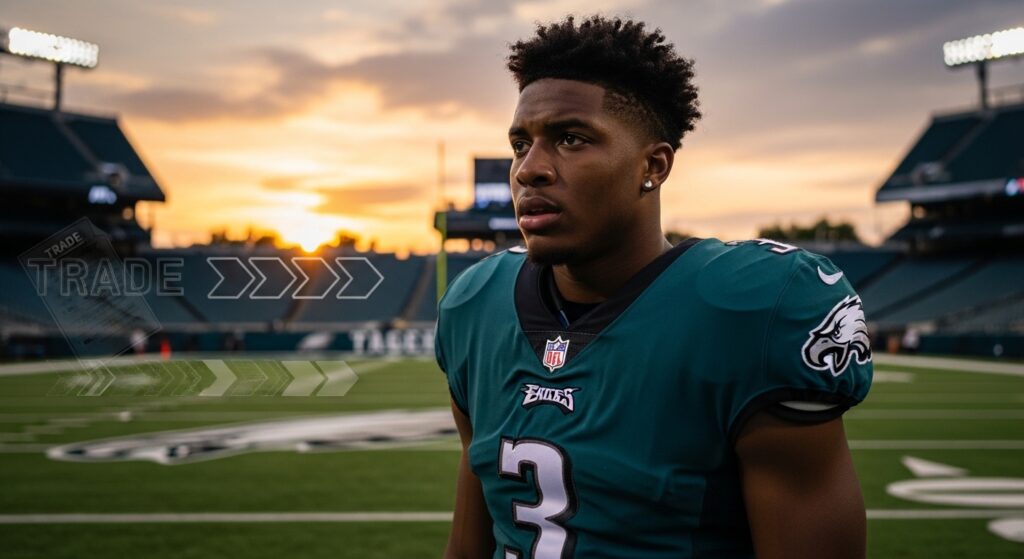
The Philadelphia Eagles’ rookie trade attempt — specifically their effort to move cornerback Kelee Ringo — became a topic of significant discussion in the NFL. Unlike blockbuster trades that grab headlines, this attempt was subtle, strategic, and ultimately unsuccessful, but it provides valuable insight into how NFL front offices evaluate young talent and manage roster construction.
In early 2026, credible reporting noted that the Eagles shopped Ringo leading up to the trade deadline, yet could not find a partner willing to complete a deal. This article explores why this trade attempt mattered — not just for Ringo — but for the Eagles organization as a whole, offering context, analysis, and implications of the move.
Understanding the Context: Philadelphia Eagles and NFL Trade Culture
What Trade Attempts Tell Us About a Franchise
In the NFL, trades involving rookies — especially recent draft selections — are not common unless the player has high perceived value or a team is engaging in bold roster construction. A team’s willingness to trade rookie assets reflects both confidence in scouting and strategic roster building.
The Eagles, under long‑time general manager Howie Roseman, are among the most active trading teams in the league. Over recent seasons, Philadelphia has established a reputation for aggressive draft‑day maneuvering and regular trades to reshape their roster.
The Failed Eagles Trade Attempt: Kelee Ringo Case Study
This section breaks down the key details of the rookie trade attempt that didn’t happen, focusing on Kelee Ringo, the Eagles cornerback whose trade the team pursued.
Who Is Kelee Ringo?
Kelee Ringo is a young defensive back who entered the NFL as a fourth‑round pick by the Eagles in the 2023 NFL Draft. Despite his pedigree as a former college standout, his professional development has been uneven.
Ringo initially competed for a starting role but struggled to secure consistent playing time. Those performance difficulties contributed to Philadelphia’s willingness to explore trade options.
Why the Eagles Tried to Move Him
The Eagles reportedly attempted to trade Ringo in late 2025 before the NFL trade deadline. The logic was simple:
-
He had lost his spot on the defensive depth chart.
-
The Eagles felt they had multiple cornerbacks to rotate.
-
They hoped to recoup a late‑round pick in exchange.
This mirrors broader NFL trends: teams often trade players who have excess depth in their position but are not viewed as core contributors moving forward.
The Trade Market Response
Despite exploring options, the Eagles were unable to find a trade partner willing to offer value for Ringo. Multiple factors contributed to this:
-
Teams were wary of acquiring a young player with inconsistent performance.
-
Other clubs prioritized other defensive needs.
-
The trade value offered by potential partners didn’t match what the Eagles wanted.
Ultimately, the attempted move fizzled out, leaving Ringo in Philadelphia amid a crowded cornerback room.
Analyzing the Front Office Strategy
Howie Roseman’s Philosophy
General manager Howie Roseman is well‑known for his willingness to be active in both the draft and trade market. The Eagles have executed record numbers of trades in NFL drafts and have rarely hesitated to make bold moves.
From trading draft picks to moving veterans — Roseman’s approach often emphasizes flexibility and roster optimization. Attempting to move a young player like Ringo fits this philosophy, even if the deal never materialized.
Why Some Rookies Aren’t Viewed as Trade Targets
In principle, high‑value rookies — especially first‑round or standout performers — can be trade assets. However, the NFL marketplace is fiercely competitive, and teams are reluctant to invest in players who have:
-
Inconsistent on‑field performance
-
Limited experience
-
Questionable fit with other schemes
In Ringo’s case, his early struggles with performance may have dampened interest league‑wide, despite his youth and physical traits.
Other Eagles Trade Scenarios Involving Rookies and Young Talent
The Eagles’ roster has seen multiple movements involving young players and draft picks in recent seasons.
Sam Howell Quarterback Trade (2025)
In 2025, the Eagles acquired quarterback Sam Howell from the Minnesota Vikings to bolster the QB room. The deal included swapping draft picks between the teams.
Howell, a young but experienced quarterback, provided depth behind starter Jalen Hurts — and illustrates how Philadelphia has targeted youth with potential impact when possible.
John Metchie III and CB Michael Carter II Transaction
Philadelphia also engaged in a trade with the New York Jets that sent wide receiver John Metchie III to New York in exchange for cornerback Michael Carter II and a late‑round pick.
This movement of young pieces highlights how the Eagles actively reshape their depth chart based on performance, fit, and potential.
Draft Day Maneuvers
Philadelphia has a history of executing multiple draft‑day trades to acquire both players and picks. These include trading up or down on draft boards, often to target specific players or accumulate future assets.
What It Means for Kelee Ringo’s Career
Future Outlook
Though the attempted trade didn’t succeed, being in demand — even as a trade candidate — provides Ringo with a chance to reflect and improve. At just 23, his career is far from over. Continued training, performance in practice, and potential special teams contributions could improve his standing.
Roster Competition and Development
The Eagles’ defensive back room is deeper than many expected, creating fierce competition. If Ringo refines his technique and earns trust from coaches, he could find a renewed role — whether in Philadelphia or elsewhere in the future.
Why The Trade Market Didn’t Materialize
Understanding why the trade failed requires examining the broader NFL landscape.
NFL Team Needs and Value
Teams value rookies based on potential performance, contract cost, and scheme fit. Many clubs may have assessed Ringo’s profile and concluded that he was not worth the draft capital the Eagles sought.
Salary Cap and Contract Implications
Even rookies come with contractual considerations. Teams must evaluate how a player’s contract affects cap flexibility while delivering on‑field value.
What Fans and Analysts Are Saying
The wife of trend discussions in Eagles fan communities reflects frustration, curiosity, and strategic debate. Many fans argued that Ringo’s situation was less about talent and more about fit, while analysts pointed out that a lack of interest from other teams demonstrates just how competitive the NFL trade market can be.
Lessons for the Eagles Moving Forward
While the failure to trade Ringo might appear like a setback, it also reveals key organizational priorities:
-
The Eagles value player development over quick exits.
-
Roseman remains willing to explore the market for value.
-
Evaluations are ongoing — and no young player is written off prematurely.
Conclusion
The Eagles rookie trade attempt involving Kelee Ringo serves as a fascinating lens into the mechanics of NFL player markets, front office strategy, and roster building. Though the deal never materialized, the process highlights how teams assess talent, weigh value, and negotiate under constraints.
Philadelphia’s front office remains aggressive, constantly evaluating ways to maximize value — even if an attempt doesn’t always succeed. For Ringo, the experience may be a pivotal point: a chance to grow, adapt, and prove himself within one of the league’s most competitive defensive systems.
Whether he ultimately thrives with the Eagles or becomes a trade candidate again in the future, this moment reflects a broader truth: in the NFL, opportunities ebb and flow — and every trade attempt tells a story beyond the transaction itself.
(FAQs)
Q1. What was the eagles rookie trade attempt?
It was Philadelphia’s effort to trade cornerback Kelee Ringo before the 2025 NFL trade deadline, though no deal was completed.
Q2. Why couldn’t the Eagles trade Ringo?
Teams were not willing to offer draft capital that matched Philadelphia’s valuation of Ringo, largely due to his inconsistent performance.
Q3. Are rookie trades common in the NFL?
Not especially. Teams usually keep rookie assets unless they see significant trade value or mismatched team depth.
Q4. Does this impact Ringo’s future with the Eagles?
The failed trade doesn’t eliminate his chances; he can still compete for playing time and improve his role.
Q5. Has the Eagles’ front office been active in other rookie trades?
Yes. The Eagles have traded young players and draft picks, including moves involving Sam Howell and others, demonstrating an ongoing willingness to optimize the roster.
Check out “Guia Silent Hill Geekzilla” for a complete guide to the Silent Hill games, lore, and tips — perfect for fans seeking an in-depth experience.